Deals · Saver Miles Team · August 31, 2026 · 10 min read
How to Actually Book Business Class to Tokyo With Points
A practical guide to flying US–Tokyo business class on points: which programs reach ANA and JAL, the typical mileage ranges, and the traps that quietly cost you.

US to Tokyo business class runs roughly 52,500 to 60,000 points one-way, but only if you book through the right partner. ANA and Japan Airlines fly the seats worth chasing; you reach them by transferring flexible card points into a partner program that prices the seat low and can see the space. ANA via Virgin Atlantic and JAL via American AAdvantage are the standout paths.
Key takeaways
- ANA business via Virgin Atlantic prices around 52,500 points one-way from the West Coast and about 60,000 from the East Coast, plus fuel surcharges.
- JAL business via American AAdvantage is about 60,000 miles one-way with near-zero taxes, one of the cleanest redemptions on the route.
- Space opens in two windows: schedule release around eleven months out, and the final one to two weeks before departure; the middle months are leanest.
- Confirm the seat before transferring, since ANA transfers are not instant and the same seat carries very different surcharges by program.
Tokyo is one of the most rewarding award routes flying out of the US, and one of the most contested. The lie-flat seats people actually want to sit in (ANA's "The Room," Japan Airlines' Sky Suite) get redeemed fast, and the programs that price them cheaply are not always the programs you have points in. Booking this route well is less about finding a secret rate and more about knowing which door to walk through, and when. Here is how the US–Tokyo business-class map looks at the time of writing, and where the value actually sits.
The two seats worth chasing
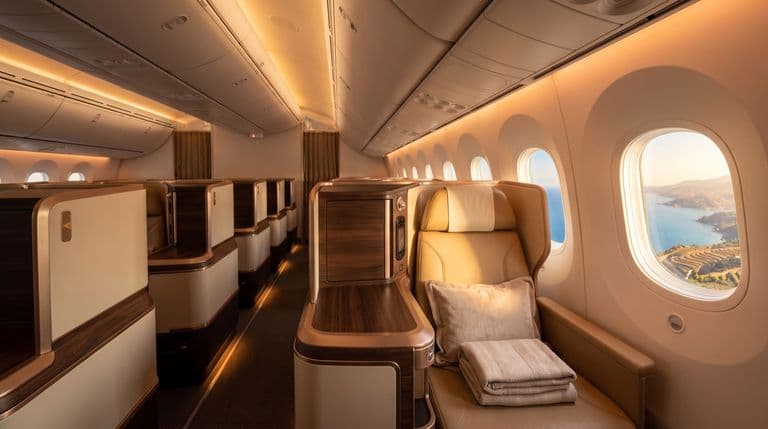
For nonstop US–Japan business class, two carriers dominate the wish list: ANA and Japan Airlines (JAL). Both fly from the major US gateways (JFK, EWR, LAX, SFO, plus Chicago and Dallas, among others) into Narita (NRT) and Haneda (HND). A comparable one-way fare in cash routinely lists north of $4,000, which is exactly why these seats reward doing the points math properly.
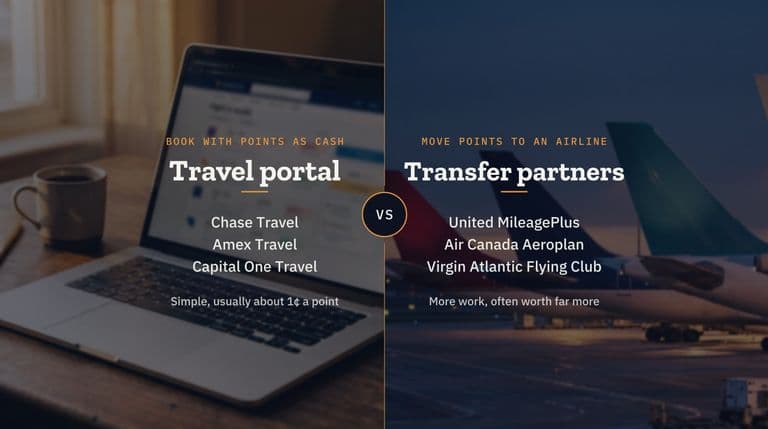
You rarely book these seats with the airline's own currency directly. You book them by transferring flexible credit-card points into a partner program that prices the seat well and can see the award space. That partner choice is the whole game. New to how transferable points work? Start with our foundation guide to flying on credit-card points, then come back, because the rest of this assumes you know the basics.
The reason the partner matters so much is that the same physical seat sells at wildly different prices depending on which program you ticket it through. ANA's business cabin does not have four fares. It has one seat, and four or more programs that each attach their own point cost, surcharge policy, and ability to see the space. Get the seat right and the program wrong, and you can pay double for nothing.
Reaching ANA business class
ANA is a Star Alliance carrier, which opens several paths. Two matter most for US travelers.
Amex Membership Rewards to Virgin Atlantic Flying Club. Amex transfers to Virgin at 1:1, and Virgin's partner chart prices ANA business at roughly 52,500 points one-way from the West Coast and around 60,000 from the East Coast at the time of writing. That is one of the strongest rates on the route. The catch: you cannot book ANA on Virgin's website. You find saver space through another Star Alliance program's search, then call Virgin Atlantic to ticket it. Virgin also passes through ANA's fuel surcharges, so budget a few hundred dollars in taxes and fees.
Amex Membership Rewards to ANA Mileage Club. Amex is the primary US transfer partner into ANA's own program, at 1:1, though transfers are not instant, so allow roughly two days. ANA's chart is inexpensive but historically round-trip only; limited one-way awards arrived in 2025, yet many redemptions still assume a round trip, so plan the return leg before you commit. These awards also carry meaningful fuel surcharges.
United MileagePlus can also ticket ANA, but United prices international partner awards dynamically, and business class to Tokyo often lands well above the fixed-chart rates above. It levies no fuel surcharges, so an occasional low dynamic price is worth a look, but it is a fallback, not a first choice.
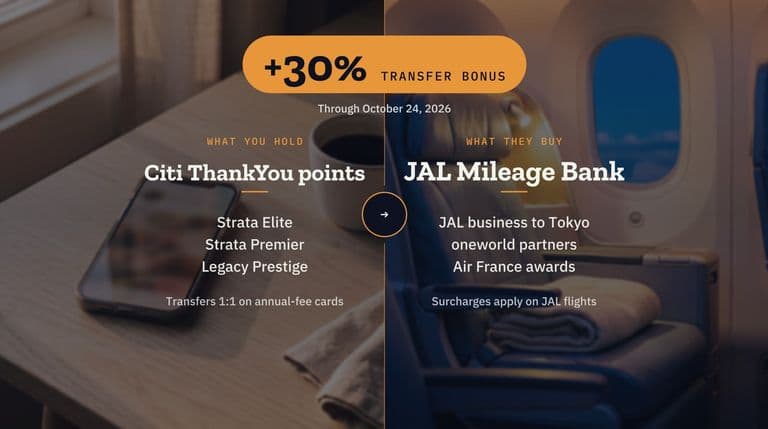
Worth knowing: Amex is not the only currency that reaches Virgin. Chase Ultimate Rewards and Citi ThankYou both transfer to Virgin at 1:1 at the time of writing, so the ANA-via-Virgin route is open to more people than they realize. But Virgin's desk can only issue what ANA has actually released, so the space check always comes before the transfer, never after.
Reaching JAL business class
JAL sits in the oneworld alliance, and two programs stand out.
American AAdvantage. JAL business from the US to Tokyo has historically priced around 60,000 AAdvantage miles one-way with very low taxes, on the order of a few dollars, because American does not pass through JAL's fuel surcharges. That mix of a fair rate and near-zero fees makes it one of the cleanest redemptions on the route. American has been nudging some connecting itineraries toward 80,000 miles, so the nonstop, single-segment rate is the one to target.
Alaska Mileage Plan (now Atmos Rewards). Alaska has long published a low JAL business rate, in the 55,000–60,000 range one-way with modest fees. The trade-off is that its JAL award space is thin and hard to surface, and the program's transfer-partner landscape has shifted. It rewards patience more than most.
What the numbers actually look like
Rough, evergreen ranges for one-way US–Tokyo business class at the time of writing:
- ANA via Virgin Atlantic: ~52,500–60,000 points, plus fuel surcharges
- ANA via ANA Mileage Club: low fixed-chart pricing, plus fuel surcharges, often round-trip framed
- JAL via American AAdvantage: ~60,000 miles, minimal taxes
- JAL via Alaska/Atmos: ~55,000–60,000 miles, modest fees, scarce space
Treat these as reference points, not live quotes. Pricing, ratios, and surcharges move, and transfer bonuses (Amex to Virgin has run 30%) can shift the math further, so confirm the rate before you transfer, because transfers are one-way and usually irreversible.
Which gateway you fly from changes the math
Tokyo award pricing is not flat across the country. On the ANA-via-Virgin path, the West Coast gateways (SFO, LAX) price at the lower band, while Central and East Coast departures (Chicago, Houston, Washington, New York) sit at the higher one. If you are flexible about where you start, positioning to a West Coast gateway can save points on the long-haul leg, even after you account for getting there.
The airport pair also shapes your arrival. Haneda (HND) sits far closer to central Tokyo than Narita (NRT), and both ANA and JAL split their US flying between the two, so when space exists into both, express a preference. And prefer a nonstop where you can: connecting JAL awards can price higher than the clean single segment, so it is often cheaper as well as more comfortable.
When the seats actually open up
ANA and JAL both release long-haul premium space on a predictable rhythm, and knowing it is half the battle.
- The early window. A meaningful chunk of business space is released when the schedule opens, often around eleven months out (AAdvantage can access JAL awards roughly 331 days ahead at the time of writing). This is your surest shot at two seats together.
- The late window. Both airlines tend to return unsold premium seats to award inventory in the final one to two weeks before departure, a gift for flexible solo travelers.
- The dead middle. The stretch in between is leanest. If you are searching three to six months out and finding nothing, that is normal, not a sign the route is impossible.
Seasonality stacks on top of this. Cherry-blossom season (late March into April) and the autumn foliage weeks are the hardest to book, because leisure demand for those dates is enormous. Flex by a week or two, or aim at a shoulder month, and your odds of clean business-class space climb sharply.
The watch-outs that quietly cost you
The rate is the easy part. These are the traps:
- Fuel surcharges. The same ANA seat can carry a clean set of taxes through one program and hundreds of dollars in surcharges through another, so which door you pick changes the out-of-pocket, not just the points. See how to avoid fuel surcharges on award flights.
- Transfer timing. Some transfers are instant; ANA's are not. Transfer a currency that takes two days to arrive and the seat can be gone before your points land. Confirm the space first, then move points, never the reverse.
- Round-trip framing. ANA's structure has historically assumed a round trip. Build your return into the plan rather than discovering the constraint after you have committed points.
- Seats together. Two travelers who need to sit together make a scarce cabin materially harder to book, and a family of four multiplies the problem; if that is you, see how to book premium seats for a family with points.
- The right currency for the seat. Having Amex points does not mean Virgin is your best route on a given date, which is why picking the transfer partner matters more than picking the airline. Our transfer partners guide breaks down which currencies reach which programs.
Why a person still beats the search box
Tokyo is exactly the kind of route where a good outcome and a mediocre one are separated by details no dashboard reconciles: which program prices this seat on these dates with the lowest surcharge, whether the space on one alliance search can actually be ticketed by the partner holding your points, and whether waiting a week for a transfer bonus beats booking today.
That is the work we do by hand. A real specialist searches award space across 30+ loyalty programs, confirms the seat is genuinely bookable, and hands you the exact points cost and the steps to ticket it. For this route, that means checking ANA and JAL against every currency you hold before a single point moves. Not an algorithm's best guess. A person who checked. And when your dates show nothing, there is a real playbook for what a specialist does when there is no award space, from waitlists to alternate routings to timing the release windows above.
Frequently asked questions
How many points for business class to Tokyo?
At the time of writing, plan on roughly 52,500–60,000 points one-way for ANA business through Virgin Atlantic, depending on your gateway, or about 60,000 miles one-way for JAL business through American AAdvantage. ANA's own program and Alaska/Atmos land in similar ranges with different trade-offs. These figures move, so confirm the live rate before you transfer.
Is ANA or JAL better on points?
Neither wins outright; it depends on which currency you hold and what you value. ANA through Virgin Atlantic often prices the lowest and offers a genuinely spectacular suite, but you cannot book it online and it carries fuel surcharges. JAL through American costs a touch more but comes with near-zero taxes and a simpler online search. The right answer is whichever the live award space and your own points support on your dates.
When should I book Tokyo award flights?
Aim for the release windows. The most reliable time is when the schedule first opens, roughly eleven months out (AAdvantage can reach JAL space around 331 days ahead), which is also your best shot at seats together. Failing that, the final one to two weeks before departure often returns unsold premium seats to award inventory. The months in the middle are leanest, so an empty search then is not proof the trip is impossible.
Do I need a specific credit card to book these?
You need points in a flexible program that transfers to the right partner. Amex reaches ANA's own program and Virgin Atlantic; Chase and Citi also reach Virgin at the time of writing; American miles are their own currency. The transfer partners guide maps which currencies open which doors.
Planning Tokyo on points
If Tokyo is on your list, start with a free points audit, and we will look at what you already have and tell you what it can actually book. Here is how it works, and what a search costs.