Guides · Saver Miles Team · August 31, 2026 · 10 min read
Flying the Whole Family Up Front on Points
Booking two to four premium seats together is the hardest award problem there is. Here is how it is actually done, and where a human specialist earns the fee.
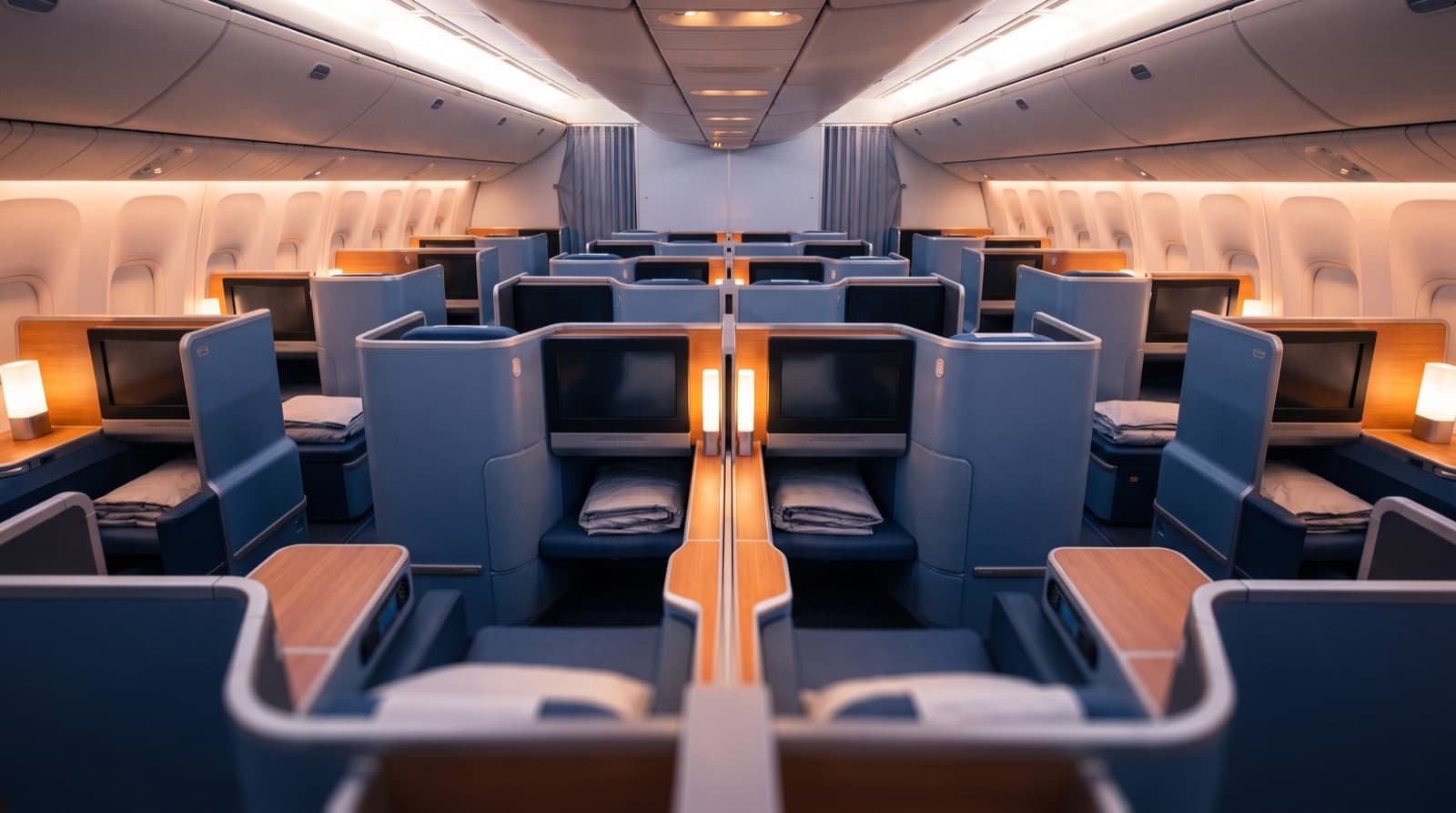
Booking two to four premium award seats together is the hardest common award request, because airlines release premium seats one or two at a time. It is regularly done, but rarely from a single search: the seats are assembled by booking early or after a schedule change, splitting travelers across programs and partners, pooling household points, and staying flexible on dates and cabins.
Key takeaways
- Premium cabins release a seat or two at a time; four together are found most reliably at schedule opening (about 11 to 12 months out) or after a schedule change.
- Assemble seats from several sources: two travelers through one program and two through another, plus mixed-cabin or split-flight plans when one cabin is full.
- Pool points through official programs (British Airways Household Account up to seven members; Air Canada Aeroplan Family Sharing up to eight), or run two currencies in parallel.
- Typical cost per person round trip: about 100,000 to 160,000 points transatlantic business, 150,000 to 250,000 to Asia, plus surcharges that vary sharply by program.
One business class seat to Europe is a solvable puzzle. Four seats on the same flight, in the same cabin, on the dates a family can actually travel, is a different order of difficulty. This is the request that breaks most do-it-yourself searches, and it is the one people most want to get right, because it is usually a once-a-year trip with children in tow.
The good news is that it is regularly done. It just rewards planning, flexibility, and knowing which levers to pull, in what order. Here is how a family should think about it.
If you are new to points entirely, start with our foundation guide on how flexible points are earned and moved; everything below assumes a household already building a balance it can deploy.
Why two to four premium seats are genuinely scarce
Airlines release award seats in premium cabins sparingly. A long-haul aircraft might have thirty-odd business class seats, and the carrier would rather sell them for cash. What it releases to the loyalty program is a small slice, often one or two seats at a time. Finding four together, on one flight, is not a matter of searching harder; frequently the inventory simply is not there on the day you look.
The scale of the problem is well documented. Studies of long-haul business class award bookings have found that the large majority of successful ones were made roughly nine months or more before departure, precisely because so few seats open up closer in. Multiple seats compound that: each additional traveler cuts the number of flights that can hold your whole party. A flight with two business seats free is off the table if you need four, even though it looked half-open.
There is a second, quieter reason four seats are hard. Airlines set award inventory dynamically, releasing fewer seats when a flight sells well, so a popular route in peak season may never show four premium seats at once, no matter how early you look. You are not just searching; you are timing a moving target.
Two facts follow, both good news. The seats do exist; they are released, just thinly and unpredictably. And you rarely need all of them from one source. The craft is in assembling them from several.
Book far ahead, or pounce on the schedule change
There are two reliable windows for multiple premium seats. The first is the moment an airline's schedule opens, typically around eleven to twelve months before departure, when the fullest inventory appears and four seats on one flight are most findable, at the cost of committing to dates early. The second is less obvious: schedule changes. When an airline re-times a flight or swaps aircraft, it often dumps fresh award space back into inventory months after the initial release, when everyone assumes the flight is closed. Watching for those releases is tedious and continuous, which is exactly why someone checking once a week misses them. Our companion piece on what a specialist does when there's no award space walks through the machinery behind these releases.
Split across programs and partners
The single most useful idea for family award travel: the same physical seat can be booked through several loyalty programs, each showing its own availability and charging its own price.
A flight that looks empty through the operating airline's own program may show two seats through an alliance partner and two more through a transfer currency that aggregates partner space. Booking two travelers on one program and two on another, for the same flight, is a standard, legitimate technique, as is accepting that your four seats come as two reservations rather than one.
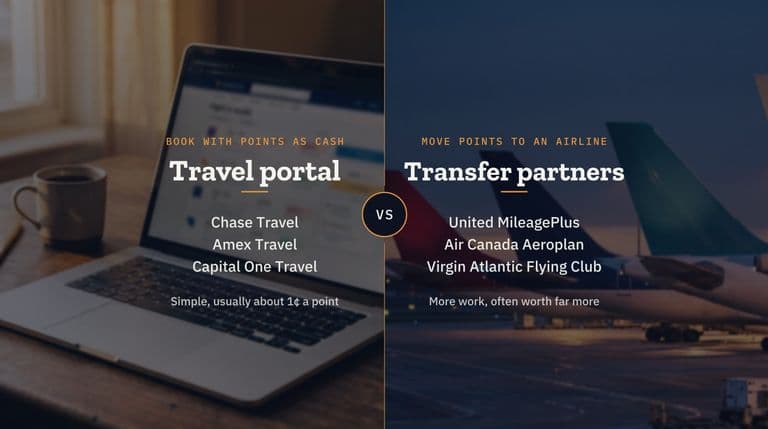
This is also where knowing the transfer landscape pays off. Flexible points from a card program can often be moved to whichever airline currency happens to show the space. Our guide to transfer partners covers how those pathways work; the short version is that the more currencies a family can reach, the more doors it can try on the same flight.
One caution belongs here. The same flight booked through different programs can carry very different out-of-pocket costs, because some pass on the airline's fuel surcharges and others waive them. Two seats through a surcharge-free program and two through a surcharge-heavy one can leave a family paying hundreds more for an identical cabin. Choosing the right program per seat, not just any program with space, is part of the craft; our note on how to avoid fuel surcharges on award flights explains where those charges hide.
Pool points, and use several currencies at once
A family rarely needs to fund four premium seats from one person's balance. Two mechanics make this practical.
Pooling lets household members combine balances. At the time of writing, British Airways runs a Household Account that pools Avios across up to seven members, where any member can redeem the shared pot for themselves or for named family and friends on the account. Air Canada's Aeroplan offers Family Sharing for up to eight members, where everyone's points flow into a single pool at no transfer fee and members with redemption privileges can book for anyone in the group, subject to conditions such as a waiting period before a new member can join. These are official, free programs, not workarounds, and they turn scattered balances into one usable total. Program rules change, so we verify the current terms before building a plan around them.
Beyond formal pooling, a family can run parallel currencies: one parent's points cover two seats through one airline, the other's cover two through another. Different currencies, same flight, one trip.
The compromises that actually get everyone on the plane
When four seats in one cabin refuse to appear, these are the trade-offs seasoned bookers reach for, in rough order of preference:
- Nearby-date flexibility. Shifting departure by a day or two, or flying midweek, is the highest-yield lever. Award calendars swing wildly day to day.
- Mixed cabin. Two adults in business, two children in premium economy on the same flight is a common, comfortable compromise, and far cheaper in points.
- Split flights. Two travelers on the morning departure, two on the evening, meeting at the destination. Not ideal with small children, but it works.
- Positioning flights. A short, cheap hop to a hub with better award space can unlock an otherwise impossible long-haul leg.
- Split routings. Different connecting cities that rejoin at the destination.
None of these is a failure; they are the normal shape of a real family award booking, and a good plan reaches for flexibility before spending more points.
A realistic timeline for a family of four
The families who land four seats together work backwards from the trip rather than starting a search a few weeks out and hoping. Roughly a year ahead, settle the destination and a flexible date window, take stock of every points balance in the household, and set up whatever pooling the family qualifies for, since programs like Aeroplan impose waiting periods before a new member can share.
Through the middle months, hold flexible points rather than transferring them until a seat is confirmed. Transferring early, before you can see the space, is one of the most common and most expensive mistakes a family makes, because most transfers cannot be reversed. In the final stretch, if four seats in one cabin have not materialised, the compromises above earn their keep: a mixed-cabin or split-flight plan booked calmly beats a frantic all-business search that never comes together.
What a family should realistically expect to pay
Point costs move, so treat these as evergreen ranges rather than live prices. For a round trip in a premium cabin, per person:
- Transatlantic (US to Europe), business class: typically in the range of 100,000 to 160,000 points round trip, plus cash surcharges that vary sharply by program.
- Transpacific or US to Asia, business class: typically 150,000 to 250,000 points round trip. A route like business class to Tokyo shows how these bookings are assembled in practice.
- First class, where available: often 200,000 to 400,000-plus points per person, and genuinely scarce for multiple seats.
For a family of four in business, plan around a multiple of those figures; the real cost depends heavily on which programs you can reach and how well you avoid surcharges. A household with a deep, flexible points balance has far more room to maneuver.
Frequently asked questions
Can I book four business class seats together with points?
Yes, though it is the hardest common award request and rarely comes from a single search. Four seats on one flight in one cabin do appear, most reliably when the schedule first opens or after a schedule change frees up inventory. When they do not, four seats are usually assembled by booking two travelers through one program and two through another, or by using a mixed-cabin or split-flight plan. The seats are out there; the work is in the assembly.
Can families pool their points together?
Often, yes, through official household and family programs. At the time of writing, British Airways lets you pool Avios in a Household Account of up to seven members, and Air Canada's Aeroplan allows Family Sharing across up to eight members with no transfer fee. Both are free and sanctioned, not workarounds, though each attaches its own rules about who can join and when. Transferable card currencies also let two adults each move points into different airline programs, which is effectively pooling by another route.
How early should a family book award seats?
Earlier than most people expect. For multiple premium seats, the strongest window is the moment the airline's schedule opens, typically eleven to twelve months before departure, when inventory is fullest; studies of long-haul business awards find most successful bookings happen many months out. Booking early means committing to dates sooner, one more reason a flexible date window helps.
What if there is no award space at all on our dates?
That is the normal starting point, not a dead end. Space is released thinly and unpredictably, and schedule changes reopen it well after a flight looks closed. A patient plan watches for those releases, checks partner programs the airline's own site never shows, and keeps points flexible until a real seat appears. Our piece on what a specialist does when there is no award space walks through it.
Where a human earns the fee
A solo search checks a few programs, on a few dates, once. A specialist checks thirty-plus programs by hand, cross-references partner availability, watches for schedule-change releases over weeks, and knows which currency prices a given seat lowest with the smallest surcharge. For one seat, that edge is nice; for four seats together, it is often the difference between the trip happening and not.
Every seat we find is checked by a real person and handed to you as a bookable itinerary with the exact point cost, not an algorithm's guess. That is the whole point of doing it by hand.
If you are planning a family trip up front, start with a free points audit. We will look at what everyone in the household holds, tell you honestly what it can reach, and show the routes worth targeting. You can also see how it works and what a full search costs.